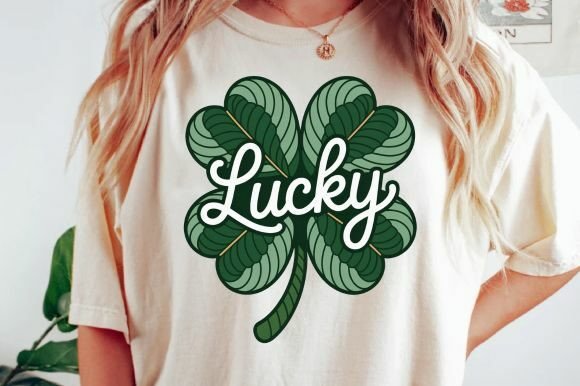
Evaluating the St. Patricks Day Lucky PNG for Professional Print-on-Demand Projects
When preparing digital assets for seasonal merchandise, the technical specifications of your source files often dictate the quality of the final product. For creators targeting the March marketplace, a St. Patricks Day Lucky PNG serves as a foundational element for various applications, from apparel to home decor. However, not all digital downloads are created equal. Understanding the specific attributes of high-resolution, transparent background files is essential for anyone looking to produce professional-grade goods without investing in vector illustration software or hiring a graphic designer.
This analysis focuses on the practical implications of using a single, high-fidelity raster image file—specifically one offering 300 DPI resolution at 4500×5400 pixels—and how it compares to other common formats available to small business owners and hobbyists. By examining the tradeoffs between ready-to-use PNGs and editable vector formats, you can better determine if this resource aligns with your production workflow and business model.
Technical Specifications and Their Impact on Output Quality
The primary value proposition of a premium St. Patricks Day Lucky PNG lies in its resolution and background handling. The standard for professional printing, particularly for Direct-to-Garment (DTG) and sublimation, requires images to be at least 300 dots per inch (DPI). Many free or low-cost alternatives found online are optimized for web use at 72 DPI. While these look acceptable on a smartphone screen, they often result in pixelation or blurriness when printed on physical items.
A file dimensions of 4500×5400 pixels provides a substantial canvas. To put this in perspective, at 300 DPI, this resolution supports a print size of approximately 15 by 18 inches. This coverage is critical for full-front t-shirt designs or large tote bag prints. If you were to attempt to upscale a smaller 1000×1000 pixel image to this size, the software would have to interpolate data, leading to a loss of sharpness. Therefore, starting with a native high-resolution file eliminates the need for complex upscaling processes that rarely yield perfect results.
Furthermore, the inclusion of a transparent background is a non-negotiable feature for versatile design work. Unlike JPEGs, which impose a white or colored box around the artwork, a transparent PNG allows the design to sit seamlessly on garments of any color. Whether you are printing on a black hoodie, a navy mug, or a patterned fabric, the transparency ensures that only the intended graphic elements appear in the final output. This saves significant time in post-processing, as there is no need to manually remove backgrounds using photo editing tools.
Comparing Raster PNGs to Editable Vector Formats
A crucial decision factor for many creators is the choice between a high-quality raster PNG and an editable vector file (such as SVG, EPS, or AI). The St. Patricks Day Lucky PNG described here is explicitly noted as "not editable." For some users, this may initially seem like a limitation compared to vector formats that allow for infinite scaling and node manipulation. However, the distinction depends heavily on your intended use case and technical proficiency.
Vector files are ideal if you need to drastically alter the shape of the design, separate individual elements for animation, or resize the graphic to billboard proportions without any quality loss. They require specialized software like Adobe Illustrator or CorelDRAW to utilize effectively. In contrast, a high-resolution PNG is a "flat" image. While you cannot move individual shamrocks or change the font of the text within the file without advanced Photoshop skills, the sheer pixel density of a 4500×5400 file means that scaling limitations are rarely an issue for standard merchandise.
For the majority of Print-on-Demand (POD) entrepreneurs and crafters using sublimation printers, the PNG format is often superior in terms of workflow efficiency. Sublimation printers and many DTG platforms accept PNGs natively. Using a pre-rendered, high-resolution PNG removes the risk of user error during the export process from vector software, such as incorrect color profile settings or accidental stroke expansions. If your goal is to get a product listed quickly with guaranteed print quality, the non-editable nature of the PNG is actually a strength, ensuring the design remains exactly as the artist intended.
Ideal Applications and Use Cases
The versatility of a St. Patricks Day Lucky PNG extends across several manufacturing methods. Understanding where this specific file type excels helps in allocating resources effectively.
- Apparel and Clothing: The high resolution makes this file perfect for screen printing separations or DTG printing. The transparency ensures clean edges on dark garments, which is a common requirement for holiday-themed streetwear.
- Sublimation Products: Items like mugs, tumblers, and tote bags rely heavily on vibrant, full-color graphics. Since sublimation transfers the ink directly into the polymer coating of the item, the 300 DPI clarity ensures that fine details in the "lucky" motifs remain sharp and do not bleed.
- Printable Wall Art and Cards: For those selling digital downloads or physical prints, the 4500×5400 dimension allows for large-format posters without quality degradation. It is also suitable for greeting cards where texture and detail are appreciated by the consumer.
- Digital Scrapbooking: Hobbyists can incorporate these elements into digital layouts without worrying about jagged edges, thanks to the anti-aliased transparency inherent in high-quality PNGs.
It is important to note that while the file is robust, it is best suited for static applications. If you intend to create cut files for vinyl cutting machines (like Cricut or Silhouette) where the machine needs to trace the outline of specific letters or shapes individually, a dedicated SVG cut file might be more appropriate. However, for "print then cut" projects or full-color prints, the PNG is the industry standard.
Licensing and Commercial Viability
From a business perspective, the licensing terms associated with digital assets are just as important as the visual quality. A St. Patricks Day Lucky PNG that permits both personal and commercial use offers significant flexibility for entrepreneurs. This dual-license structure allows you to use the design for your own family's holiday shirts while simultaneously listing products featuring the design on marketplaces like Etsy, Amazon Merch, or Shopify.
When evaluating resources, always verify the scope of "commercial use." Some licenses restrict the number of physical sales or forbid use on POD platforms. A license that explicitly states "Ready-to-use for your creative or POD Print-on-Demand business" removes these ambiguities, allowing for scalable growth. This is particularly valuable for seasonal niches like St. Patrick's Day, where the sales window is short, and the ability to launch products immediately without legal friction is critical.
Decision Factors: When to Choose This Option
Selecting the right asset comes down to balancing convenience, quality, and customization needs. The St. Patricks Day Lucky PNG is the optimal choice if:
- You prioritize speed to market and need a file that is ready to upload immediately.
- Your primary production methods are sublimation, DTG, or screen printing.
- You lack advanced vector editing skills or do not wish to spend time modifying design elements.
- You require guaranteed print quality at standard merchandise sizes without risking upscaling artifacts.
Conversely, you may need to seek an alternative if your project requires extensive modification of the artwork, such as changing the text entirely, rearranging specific graphical components, or creating animated digital content. Additionally, if you are producing very large format signage exceeding 15 inches in width, a vector format would theoretically offer better scalability, though the 4500-pixel width of this PNG is sufficient for most retail applications.
In conclusion, integrating a high-resolution, transparent St. Patricks Day Lucky PNG into your asset library provides a reliable foundation for seasonal product lines. By leveraging the technical advantages of 300 DPI resolution and broad commercial licensing, creators can focus on marketing and sales rather than troubleshooting file quality issues. While it lacks the malleability of vector files, its readiness and fidelity make it a pragmatic choice for efficient, high-quality production in the competitive POD landscape.